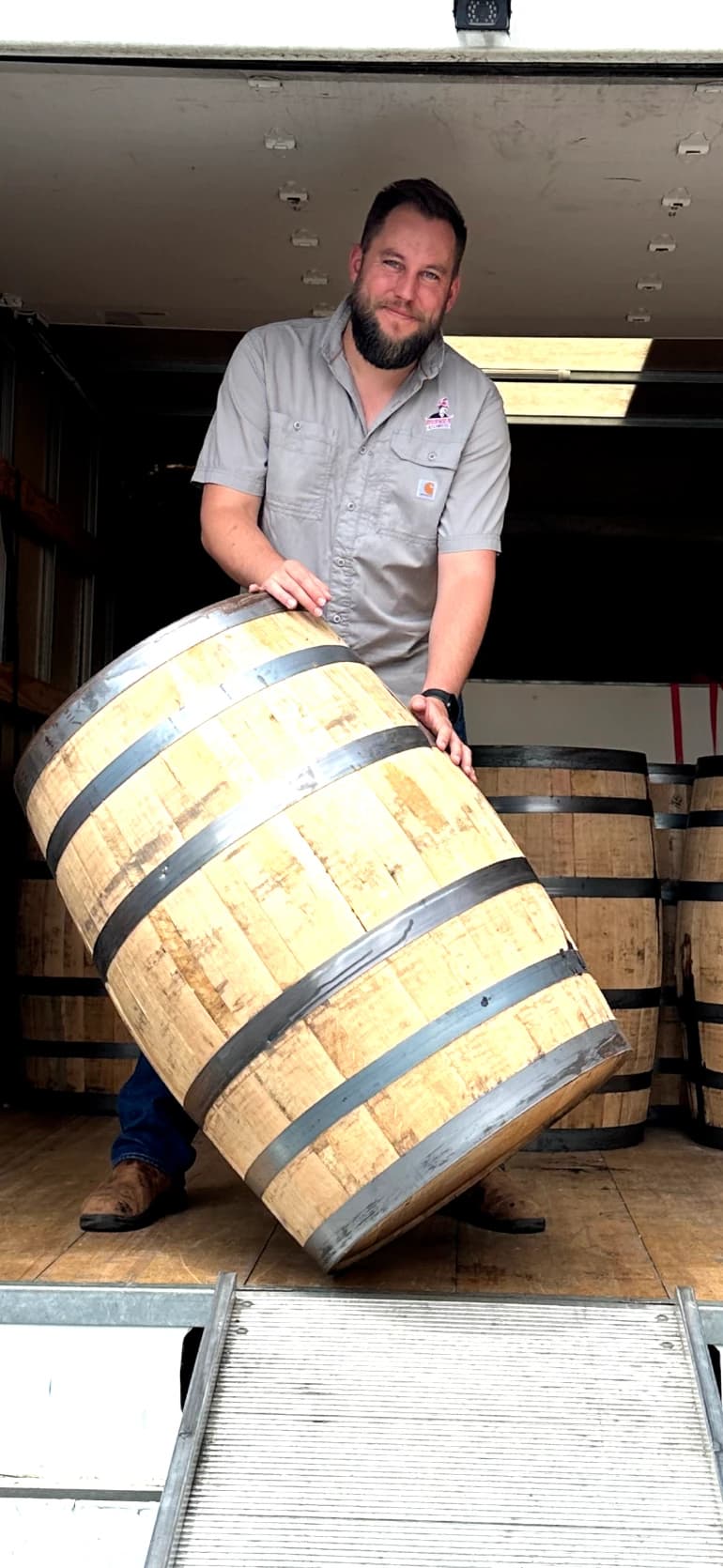
I ran a business before I sold software
I founded Buskey Cider in Scott's Addition in 2016, after making cider in my dorm room at Hampden-Sydney and winning a business plan competition that paid for the first tanks. We grew it to about thirty people at peak, hundreds of SKUs, millions of cans, and hundreds of thousands of gallons of Virginia apple juice. During COVID we launched a new product every Friday to stay afloat. I still own the cidery and the building it sits in.
I am not a technologist. I am an operator who learned to build.
What actually ran my week
Not cider. Email.
There was too much of it, and the ones that mattered were buried in the ones that didn't. Same with voicemail: almost all spam, but every so often a private event inquiry worth real money sitting underneath forty robocalls. I looked like a bad boss to people who deserved better, when the truth was I was underwater and trying to juggle all of it at once.
For ten years, the single most common question anyone asked us was whether our cider is gluten free. By phone, by email, in the tasting room. I could not begin to count how many times we answered it.
Compliance and reporting were worse. I'd push my team to send reports, then fall behind reading them, and eventually the reports would just stop coming.
Here is what a single distributor order looked like.
A distributor emails the wrong person. It gets forwarded. The tasting room gets asked how much inventory they think they'll need. I get pulled in to say which distributor to prioritize. We send over the days we can do a pickup, and make sure a forklift operator is scheduled to load. Their window comes and goes, so we text to ask where the truck is. When it shows up, they bring back empty kegs nobody told us about and decide they don't want all of what they ordered. Finance reissues the invoice with the keg credit and the adjusted order. The signed copy goes in a drawer until the quarterly tax filing, and the invoice goes out through QuickBooks.
That is one order. We ran on a POS, ADP, QuickBooks, Shopify, Google Docs, distributor portals, and the state and federal agencies we filed with, and none of them talked to each other.
Inventory should have driven everything. Good liquid was the whole business. Instead, inventory dragged us down. The tasting room asked production what got made. Production asked the tasting room what sold through. Distributors called asking for something we hadn't planned to make that year. Finance wanted cost of goods quarterly. Cans versus kegs was mostly a guess, because we never had real sales data in front of us when we had to decide.
Why I stepped away
I became a dad, and I didn't want to miss bedtime.
There's a bad feeling that comes with burnout, where you start wondering whether you're dragging down the thing you built. Realizing you might be in the way is hard. Buskey was all I'd ever done. In 2026 I handed day-to-day operations to Kevin Pusak, who had been with us for years and is now a partner and the CEO. My wife Elle and I are still owners.
Then I learned what agentic AI could actually do, and the thing I kept thinking about wasn't efficiency or cost savings. It was that for the first time, a small business owner might not have to choose between taking the call and making the T-ball game.
That's what this is about.
What I'd do differently
It took me far too long to internalize the 80/20 rule. I chased every opportunity and ran myself and my team into the ground doing it. Most of what filled my days was not what moved the business.
That's the same instinct I bring to this work. The question isn't what AI could theoretically do for you. It's which one thing is eating your week.